
How Do I Stop My Dog from Guarding Food, Toys, Furniture, or People?
Build your dog’s confidence and trust in you.
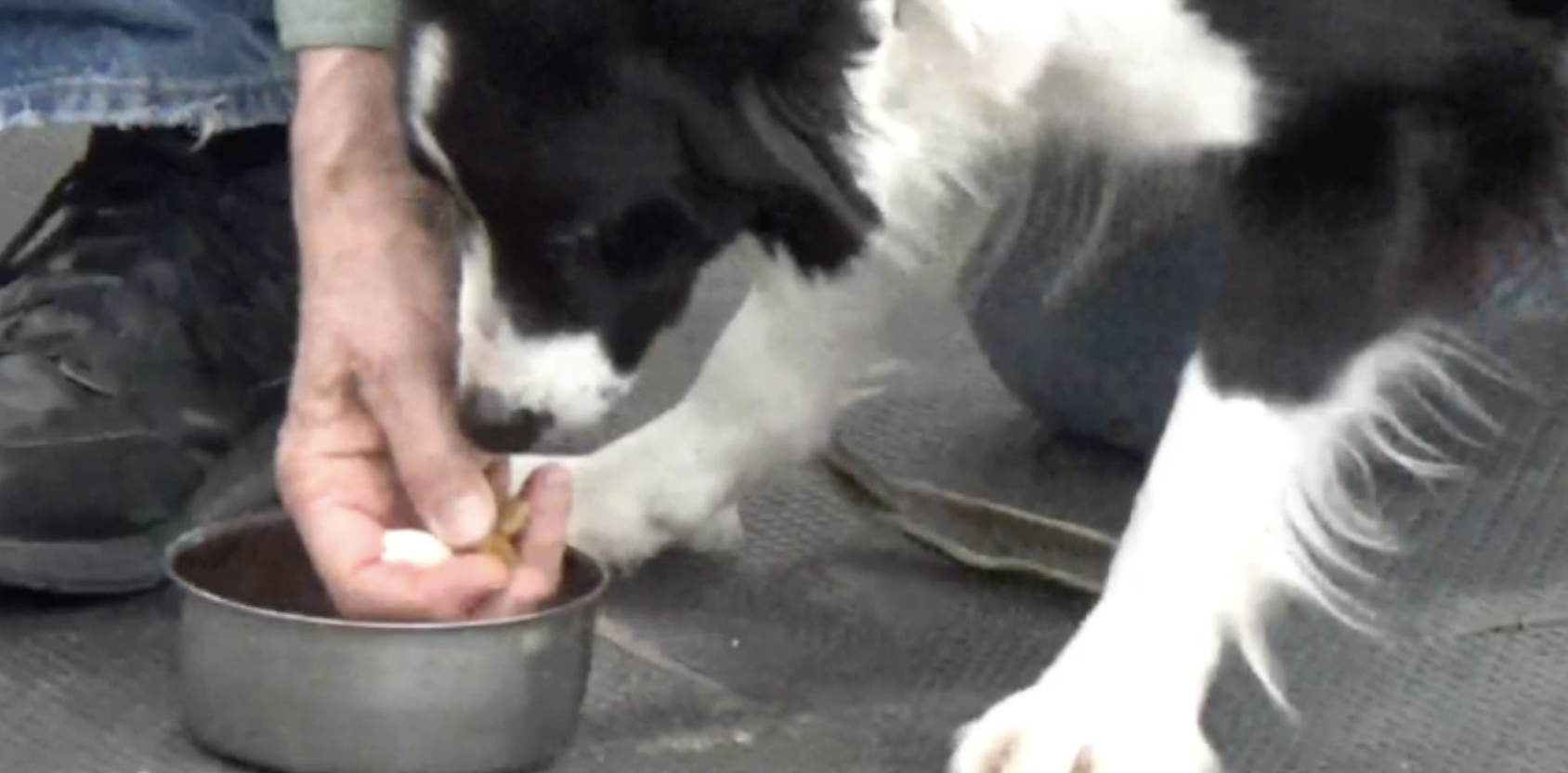
.jpeg)
Dogs may fear that things important to them sometimes get taken away. Warning behavior is a response.
Why Dogs Guard
- Guarding is a natural canine behavior designed to protect valuable resources.
- Dogs may guard food bowls, treats, toys, sleeping places, furniture, doorways, or even people.
- Some dogs have learned through experience that valuable things can be taken away.
- Fear, insecurity, or uncertainty can increase guarding behavior.
What to Avoid
- Punishing growling or warning signals.
- Reaching suddenly for food, toys, or other valued items.
- Challenging the dog to "prove who's boss."
- Ignoring the dog's early warning signs.
- Repeating situations that trigger guarding without a training plan.
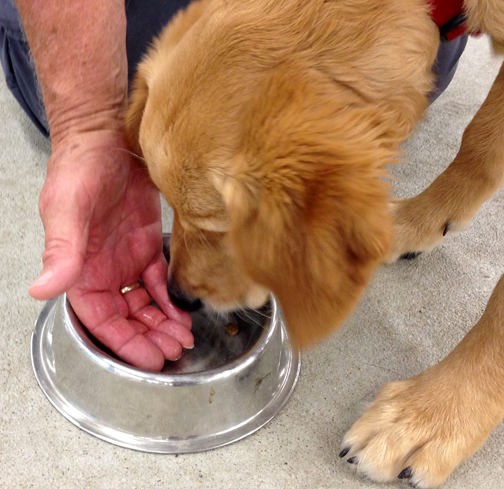
The handler’s hand and hands of other members of the family in the dog food bowl and petting the dog as the dog eats are strategies to curb guarding behavior.
What Can Help
- Learn to recognize the dog's earliest communication signals.
- Teach the dog that people approaching valuable items predict good things rather than loss.
- Reward calm, relaxed behavior around people and other dogs.
- Develop a patient, structured training plan that builds confidence and trust.
- Teach the dog alternative responses that replace guarding.
Get professional help if your dog is showing aggressive behaviors toward you or other members of the family. Aggressive behavior always escalates until you curb it.
Summary
Dogs usually use the least amount of force necessary to solve what they believe is a problem. Guarding often begins with quiet signals before growling or snapping. By understanding why your dog feels the need to protect resources, you can teach calmer, more confident behaviors that replace guarding.
How We Can Help
- Help you understand why guarding occurs.
- Help you build trust, confidence, and self-control so your dog no longer feels the need to protect valued resources.
- Schedule an evaluation and let us help you develop a training plan that's right for your dog.
About the Author
Ann Gafke has spent more than 50 years helping dogs and their owners succeed through practical, positive training. She is the founder of DogSchooling in Columbia, Missouri and has helped thousands of families build more confident relations with aggressive or reactive dogs.
Why Families Choose DogSchooling
- More than 50 years serving Mid-Missouri families
- Positive, reward-based training
- Weekly classes with private coaching included
- Video feedback between classes
- Puppy, family, therapy, service, and reactive dog programs